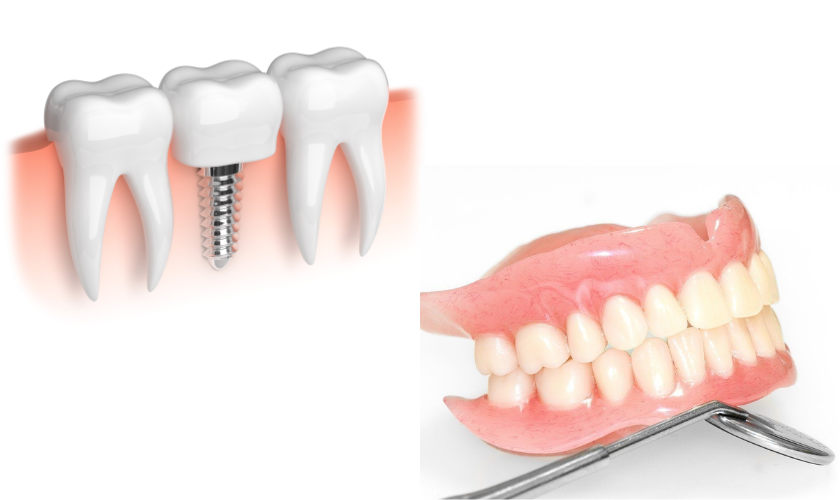

Choosing between dental implants and dentures is a crucial decision for individuals facing tooth loss. Both options offer distinct advantages and considerations, impacting not only oral health but also overall well-being. In this detailed examination, we delve into the features of dental implants and dentures to help you make an informed choice tailored to your specific needs.
Understanding Dental Implants
Definition and Procedure
Dental implants are artificial tooth roots made of titanium, surgically placed into the jawbone. This process involves a meticulous procedure, ensuring a secure foundation for the replacement tooth or crown.
Advantages of Dental Implants
- Permanent Solution: Dental implants provide a long-lasting and permanent solution for tooth replacement.
- Natural Look and Feel: Implants closely mimic the appearance and function of natural teeth, enhancing both aesthetics and functionality.
- Preservation of Jawbone: Implants stimulate the jawbone, preventing deterioration and maintaining facial structure.
Exploring Dentures
Types of Dentures
Dentures, on the other hand, are removable prosthetic devices designed to replace missing teeth. There are two main types:
- Complete Dentures: Replace all teeth in the upper or lower jaw.
- Partial Dentures: Replace a few missing teeth and can be attached to natural teeth.
Advantages of Dentures
Affordability: Dentures are generally more affordable than dental implants, making them a cost-effective option.
Non-Invasive: The process of obtaining dentures is non-invasive compared to the surgical nature of dental implants.
Adjustability: Dentures can be easily adjusted or replaced as the jaw structure changes over time.
Factors Influencing the Choice
Health Considerations
Bone Density: Individuals with low bone density may face challenges with dental implants, whereas dentures are more accommodating.
Overall Health: The patient’s general health plays a role; those with certain medical conditions may find one option more suitable than the other.
Lifestyle Factors
Maintenance: Dental implants require less maintenance than dentures, which need regular cleaning and removal.
Dietary Restrictions: Implants allow for a more natural chewing experience, eliminating dietary restrictions common with dentures.
Making the Decision: A Personalized Approach
Considering the unique aspects of your health, lifestyle, and budget is essential when deciding between dental implants and dentures. Consulting with a qualified dentist can provide personalized insights based on your specific circumstances.
Choose the option that aligns with your preferences and lifestyle for a confident and healthy smile. Consult with a dental professional to make an informed decision tailored to your unique needs.
Frequently Asked Questions
Q1: Are dental implants painful?
A: The procedure is performed under local anesthesia, ensuring minimal discomfort during the surgery. Post-surgery, any pain is typically manageable with prescribed medications.
Q2: How long do dental implants last?
A: With proper care and maintenance, dental implants can last a lifetime. Regular check-ups and good oral hygiene practices contribute to their longevity.
Q3: Can anyone get dental implants?
A: While many individuals are eligible for dental implants, a thorough evaluation of oral health and bone density is necessary. Some medical conditions may impact eligibility.
Q4: Do dentures look natural?
A: Modern dentures are crafted to resemble natural teeth closely. Advancements in dental technology ensure a natural appearance, especially with high-quality materials and skilled fabrication.
Q5: How do I care for dentures?
A: Dentures require daily cleaning and removal for proper maintenance. Brushing, soaking, and regular dental check-ups are crucial for extending their lifespan and ensuring oral health.
In conclusion, the choice between dental implants and dentures is a personal one, influenced by various factors. Understanding the features, advantages, and considerations of each option empowers individuals to make a decision that aligns with their oral health goals and lifestyle.